General Enquiries :
+91 80 6215 3300Emergency Number :
+91 80 6215 3400Pre-Book Your Appointments :
1800 123 1133
General Enquiries :
+91 80 6215 3300Emergency Number :
+91 80 6215 3400Pre-Book Your Appointments :
1800 123 1133





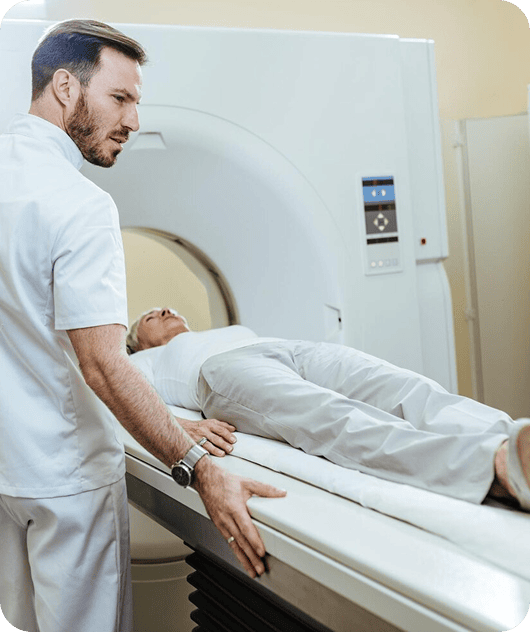
Positron Emission Tomography (PET) Scan is an advanced nuclear medicine imaging technique that provides detailed functional and metabolic information about tissues and organs. Unlike conventional imaging methods, which primarily depict anatomical structures, PET scans reveal the biochemical activity within cells, making them invaluable for the diagnosis, staging, and monitoring of cancers, neurological disorders, and cardiovascular diseases.
PET scanning involves the administration of a small amount of radioactive tracer, commonly fluorodeoxyglucose (FDG), which mimics glucose and is preferentially taken up by metabolically active cells. Cancer cells, inflamed tissues, and areas of abnormal metabolism absorb higher amounts of the tracer, allowing PET scanners to detect abnormal activity. The scanner detects gamma rays emitted by the tracer and generates detailed three-dimensional images highlighting areas of increased metabolic activity. PET scans are widely used in oncology to identify primary tumours, detect metastases, plan radiotherapy, and monitor treatment response. In neurology, PET helps evaluate conditions such as Alzheimer’s disease, epilepsy, Parkinson’s disease, and other neurodegenerative disorders by assessing brain metabolism. In cardiology, PET is used to evaluate myocardial viability and perfusion, aiding in decisions regarding revascularisation procedures.
The procedure is non-invasive, and the radiation exposure is minimal and controlled according to safety guidelines. Patients are advised to fast before the scan, and precautions are taken for diabetic patients. The scanning process typically takes 30–60 minutes, during which the patient must remain still to ensure image clarity. The images are analysed by nuclear medicine specialists and radiologists, providing critical diagnostic and prognostic information. By offering precise functional imaging, PET scans enhance early disease detection, accurate staging, and individualised treatment planning. They play a crucial role in improving clinical outcomes, monitoring therapeutic efficacy, and guiding decision-making across oncology, neurology, and cardiology specialities.
Has touched more than a million lives


Emergency: +91 80 6215 3400
© Copyright 2026 Ramaiah Memorial Hospital