General Enquiries :
+91 80 6215 3300Emergency Number :
+91 80 6215 3400Pre-Book Your Appointments :
1800 123 1133
General Enquiries :
+91 80 6215 3300Emergency Number :
+91 80 6215 3400Pre-Book Your Appointments :
1800 123 1133




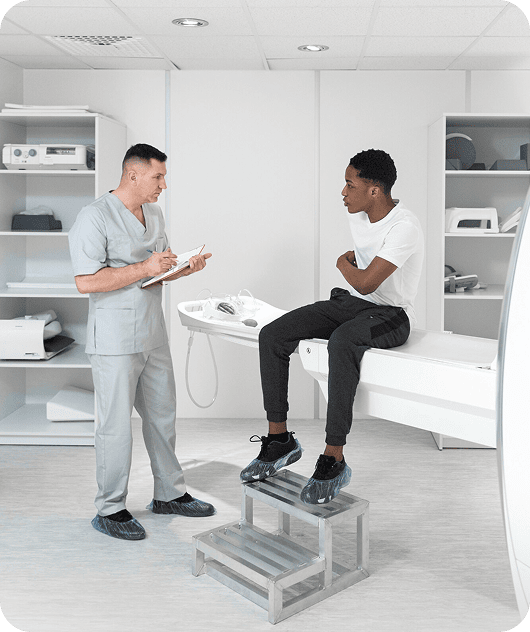
The Head Up Tilt Table Test (HUTT) is a specialised diagnostic procedure used to evaluate unexplained fainting (syncope), dizziness, and suspected autonomic nervous system disorders. It helps determine whether a patient’s fainting episodes are related to abnormal heart rate or blood pressure responses when changing position, a condition often associated with vasovagal syncope, orthostatic hypotension, or other autonomic dysfunctions.
During the test, the patient is securely strapped to a motorised tilt table. Initial monitoring is conducted while the patient is lying flat, recording heart rate, blood pressure, and electrocardiogram (ECG) parameters. The table is then gradually tilted to an upright position, simulating a change in posture from lying to standing. Continuous monitoring allows clinicians to observe cardiovascular responses and identify abnormal drops in blood pressure or irregular heart rhythms that may lead to fainting. HUTT is particularly valuable when routine cardiovascular evaluations, such as ECG or echocardiography, are inconclusive. It provides insights into the body’s autonomic regulation of heart rate and vascular tone, helping distinguish between cardiac, neurological, and reflex-mediated causes of syncope. In some cases, pharmacological agents may be administered during the test to provoke and assess specific responses under controlled conditions.
The procedure is safe, minimally invasive, and performed under the supervision of trained cardiologists and nursing staff. Patients are closely monitored for any symptoms, and prompt interventions are available if adverse reactions occur. Test results guide diagnosis, risk stratification, and individualised management, which may include lifestyle modifications, medications, or pacemaker therapy in select cases. By providing a detailed assessment of autonomic cardiovascular function, the HUTT test enables accurate diagnosis, targeted treatment, and prevention of recurrent fainting episodes, improving patient safety, quality of life, and long-term cardiovascular health.
Has touched more than a million lives


Emergency: +91 80 6215 3400
© Copyright 2026 Ramaiah Memorial Hospital